I. Introduction: Redefining the Limits of Traditional Surgical Broadcasting
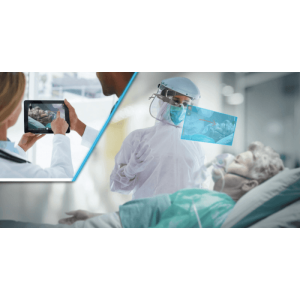
In high-pressure and time-critical surgical environments, live surgical video plays a pivotal role in clinical decision-making and medical education. However, traditional side-mounted camera systems often struggle to meet real clinical demands. Issues such as glare caused by surgical lighting, visual obstruction from the surgeon’s hands, and the inability of camera operators to enter sterile zones for real-time angle adjustments frequently result in incomplete or suboptimal visual coverage. In addition, challenges including video latency, insufficient brightness, and limited image resolution further compromise the accuracy and reliability of surgical visualization. These limitations create a disconnect between what is captured on screen and the surgeon’s actual operative actions, reducing the effectiveness of real-time collaboration and clinical communication within the operating room.For healthcare institutions, the challenge extends beyond camera placement or imaging hardware.
Ensuring consistent image quality, seamless intraoperative communication, and continuous optimization of surgical workflows has become a critical priority in advancing operating room efficiency and patient care.
II. AR First-Person View: Bringing Surgical Demonstrations Closer to Real Clinical Practice
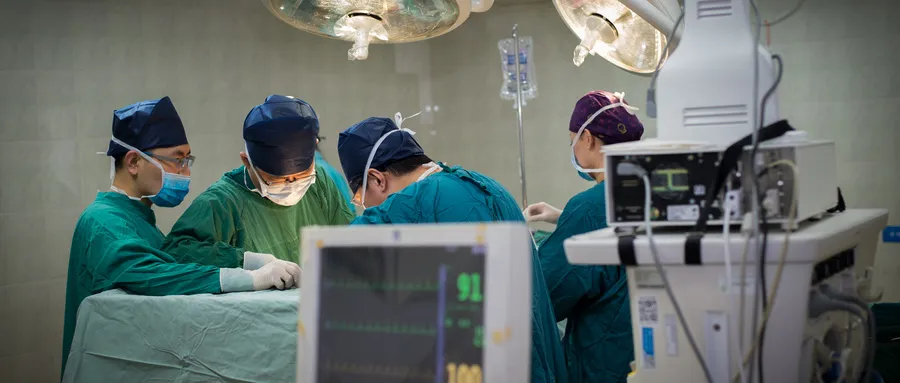
基於前In response to the growing demand for more accurate and immersive surgical visualization, Linkou Chang Gung Memorial Hospital became an early adopter of the Vuzix M400 AR Smart Glasses,integrating the solution into live bilateral knee joint replacement procedures. The lead surgeon wore the device throughout the operation, enabling direct first-person capture of the surgical workflow. This approach represents a significant evolution in surgical demonstration methods. By aligning visual output with the surgeon’s true perspective, the system delivers a more clinically relevant and intuitive viewing experience, redefining how surgical procedures are recorded, shared, and analyzed.Key advantages of first-person AR surgical visualization include::
Automatic alignment with the surgeon’s line of sight, ensuring precise capture of critical operative details and fine motor movements
Stable and unobstructed imaging, unaffected by hand movement, surgical instruments, or surrounding personnel
Remote adjustment of camera angle and focus, allowing external technical teams to fine-tune visualization without interrupting the procedure
Consistent visual perspective between surgeon and viewers, significantly reducing interpretation gaps during live demonstrations and post-operative review
By delivering an authentic first-person surgical experience, critical procedural steps that were previously reliant on experiential learning can now be accurately visualized, reviewed, and discussed. This transforms tacit surgical knowledge into high-quality educational content, supporting more precise training, analysis, and clinical collaboration.
III. First Surgical Demonstration: Critical Alignment Details Clearly Visualized for the First Time

The first AR-assisted surgical demonstration was conducted during Dr. Wu’s U2™ primary total knee arthroplasty procedure.Using Honghong’s AR smart glasses, the surgical team was able to comprehensively capture a series of highly precise and clinically critical steps, includingbone surface preparation, implant alignment, and soft tissue balancing.These key procedures are traditionally difficult to document using conventional camera systems due to limited viewing angles, hand obstruction, and insufficient depth perception.
As a result,many subtle but essential surgical decisions are often lost or inadequately represented in standard recordings.
With first-person footage captured through AR smart glasses, the clinical team was able to clearly observe:
How surgeons assess and determine knee alignment angles
How micro-adjustments are performed based on soft tissue tension
The clinical reasoning behind each implant positioning decision
This level of surgical detail—previously dependent on verbal explanation or experiential learning—can now be accurately visualized, reviewed, and discussed. As a result, the AR-captured footage has become one of the most valuable teaching resources for both in-hospital training and cross-institutional clinical education.
IV. Second Surgical Demonstration: Reconstructing Clinical Decision-Making in Complex Revision Surgery
The second AR-assisted surgical demonstration was conducted during Dr. Lin’s U2 PSA™ revision knee arthroplasty, further demonstrating the value of Honghong’s AR smart glasses in complex clinical scenarios.
Revision procedures involve a high degree of complexity, includingbone loss management, implant removal, and reconstruction of long-term joint stability.These surgeries require nuanced intraoperative judgment,yet traditional camera-based recordings often fail to convey the underlying clinical reasoning behind each surgical decision.
Through AR-based first-person visualization, the surgical team was able to clearly present:
How surgeons assess and classify bone defects
The force application and angles involved in implant removal
How visual clarity is maintained in confined operative spaces
The clinical rationale for re-establishing alignment and joint stability
By capturing the surgeon’s true line of sight, AR imaging enables complex surgical workflows to be visualized in a clinically meaningful way. This allows intricate decision-making processes—previously difficult to explain or document—to become observable, reviewable, and open to structured discussion. As a result, AR-based demonstrations provide a solid educational foundation for understanding complex revision procedures, bringing surgical teaching closer to real-world clinical practice.

V. No Disruption, No Additional Staffing: A Truly Clinical-Ready Imaging Model
Both surgical demonstrations were completed smoothly without the need for additional camera operators, confirming AR smart glasses as the most clinically appropriate imaging solution for real-world operating room environments. This AR-based approach ensures:
No additional space requirements, preserving sterile field integrity
No camera repositioning during surgery, eliminating workflow interruptions
No added operational burden on surgical or clinical staff
No disruption to established surgical procedures
Consistent and stable video output throughout the operation
With surgeons able to remain fully focused on the procedure itself, high-quality imaging is captured seamlessly in parallel. For high-intensity surgical environments where precision, timing, and workflow discipline are critical, this model significantly reduces external interference and delivers tangible, practice-driven workflow optimization.
VI. Cross-Hospital Demonstration, Global Collaboration, and Clinical Training:
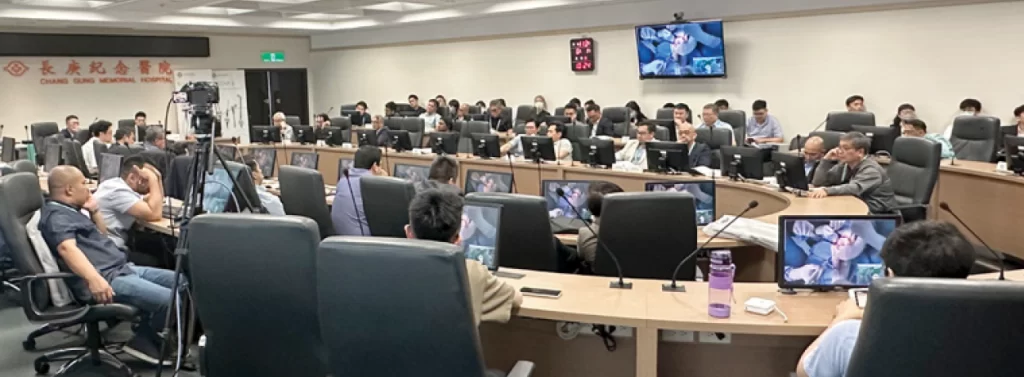
On the demonstration and training side, AR-based imaging enables surgical visuals to be presented on large displays in real time.With support from remote technical teams, camera angles and image parameters can be adjusted externally—ensuring consistent image quality without introducing additional equipment into the operating room.。
Powered by theHonghong AR Expert System, this platform enables:Faster and more efficient cross-hospital surgical demonstrations, stable, high-resolution output for international remote education, hospital training environments that closely replicate real clinical scenarios, systematic capture of surgical expertise, transforming procedures into reusable clinical knowledge assets.These capabilities explain why an increasing number of medical institutions are evaluating and adopting the Honghong AR Expert System. Its value extends beyond image enhancement—it represents a structural upgrade to clinical workflows. By aligning surgical demonstrations with the surgeon’s true perspective, removing dependence on manual camera operation, and dramatically shortening communication latency between operating rooms and audiences, AR enables more efficient, consistent, and traceable knowledge transfer.
The successful deployment at Chang Gung Memorial Hospital demonstrates that AR smart glasses have moved beyond conceptual innovation and into clinical practice—establishing a new foundation for surgical education and collaborative care.
👉 Interested in how AR smart glasses can enhance surgical education and clinical efficiency?
ContactHonghong AR Medical Solutionsto learn how we support healthcare institutions with:
Live Surgical Streaming
Remote Clinical Consultation
Surgical Education & Demonstration
Resident and New Staff Training
In-Hospital SOP Visualization
📩 Contact Honghong today— we’ll work with you to design a solution tailored to your clinical workflows and educational needs.
Honghong will provide you with any support you need!
Our professional Honghong team will be the first to respond and provide you with the best service to solve all your problems.