I. Aerospace applications
Utilizing a wide range of technologies, the aerospace industry continually seeks to improve the control, efficiency, range, payload, and service life of aircraft.Materials science, communications, aerospace, and engine/propulsion technology are all critical research areas, each of which uses electronic signaling to help determine performance.For example, in materials science, new products and compounds need to be tested and qualified to understand how they perform under different conditions.
In order to do this, engineers carry out a large number of tests on materials to see how they behave under different conditions, such as stress, strain, vibration and temperature, and sensors for key parameters such as strain, force and acceleration generate electronic signals that need to be captured and measured. Other techniques such as ultrasound, laser and radio waves can also be used to help observe how a material behaves during destructive or non-destructive testing.
Typical aerospace applications include aeronautical engineering, satellite communications, guidance and tracking systems, destructive and non-destructive materials testing, propulsion and engine testing, surveillance and electronic warfare, shock studies, mechanical testing and vibration analysis.

Two,Spectrumprogrammatic
To cover the wide range and diversity of electronic signals in the aerospace industry, theSpectrumOffering an extremely wide range of digital and arbitrary waveform generators, these products are available in a variety of popular standards including PLC, PCle, PXI, and LXI. they...Offers bandwidths from 50kHz to 1.5GHz, sampling rates from 100KS/s to 5GS/s, and resolutions from 8-bit to 16-bit.When large dynamic range and maximum sensitivity are required, the high-resolution 14-bit 16-digit characterizer can be used to capture and analyze signals at frequencies up to 250 MHz.
TheseHigh-resolution products feature signal-to-noise ratios of up to 72dB and a scatter-free dynamic range of up to 90dB, making it possible to detect and analyze small signal changes.They are ideal for use with sensors used in mechanical test systems or ultrasonic systems.
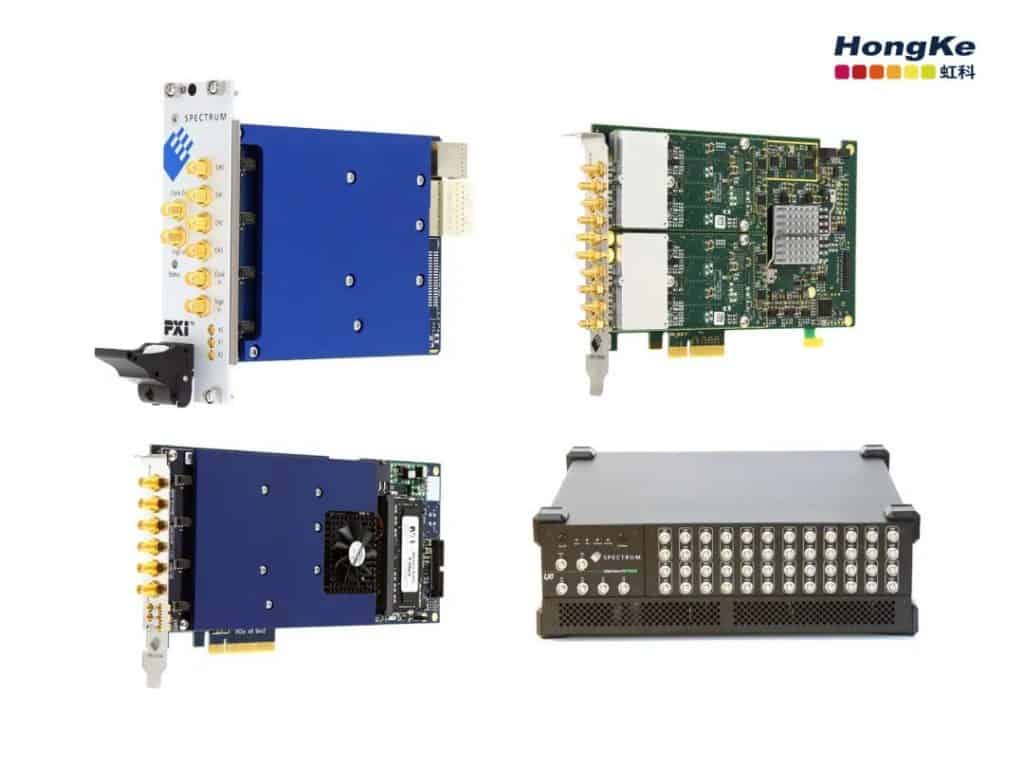
High frequency products are suitable for applications using RF and radar signals, such as aircraft tracking and guidance systems, surveillance, radio and satellite communications and even electronic warfare applications.With large onboard memory (up to 4G samples per card) and advanced data streaming and readout modes, the digitizer is ideally suited to capture the long and complex signals in these fields.In fact, data captured in streaming mode can be quickly transferred to RAID-based storage arrays via the digitizer's PCIe interface, allowing for seamless storage of hours of information.
III. Board Series
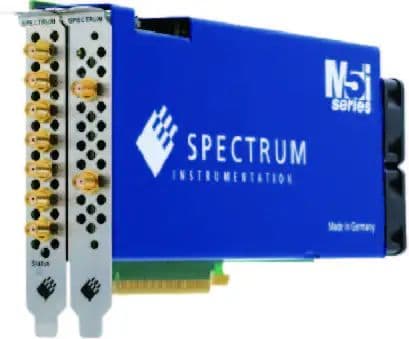
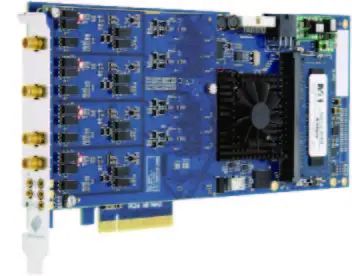
Four,SpectrumProduct Features
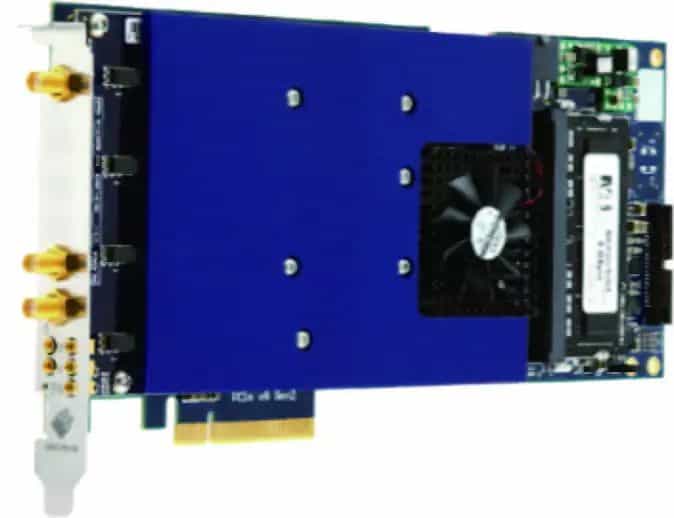
- 14 and 16 bit resolution
- Segmented Storage with FIFO Readout
- PCIe, PCI, PXI, LXI External Dimensions
- Sampling rate up to 10GS/s, bandwidth over 1.5GHZ
- Continuously streams data to RAID disk series at speeds up to 3GB/s.
Contact Us