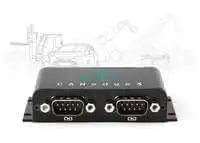
CANedge3: 2x CAN data logger (SD+3G/4G+GPS/IMU)
Function Overview:
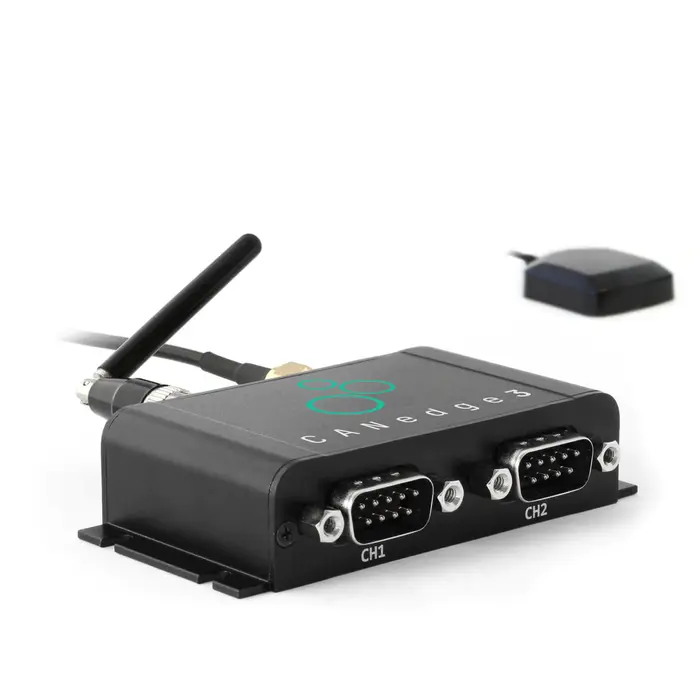
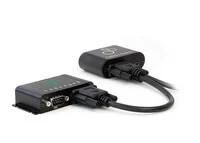
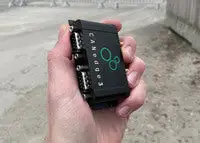
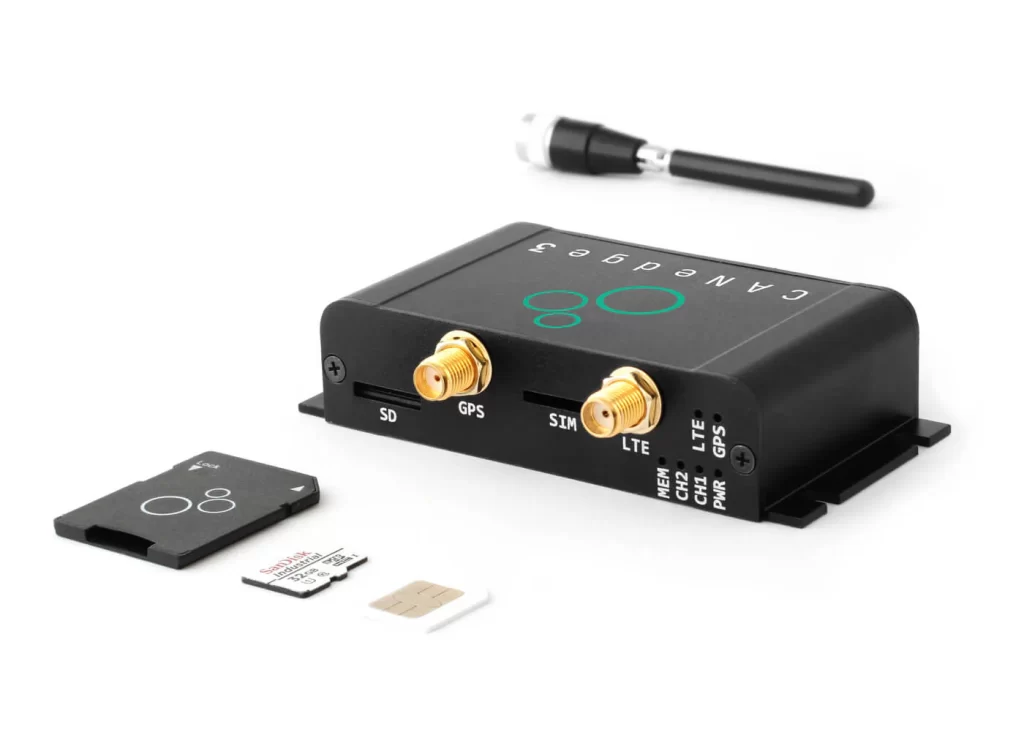
CANedge3 CAN Bus Data Logger The CANedge 3 is a highly efficient 2x CAN/LIN logger that supports SD card data storage and 3G/4G remote data transfer for fleet management, IoT, remote information processing and other applications. With built-in GNSS/IMU for accurate recording of position, speed, attitude, etc., the CANedge 3 features a plug-and-play design with no subscription fees or vendor lock-in, OTA updates and open source software/API support, and a compact, rugged aluminum enclosure that makes it easily adaptable to a wide range of demanding environments, providing excellent data recording and remote transmission capabilities.
Description





Professional Specification CAN Recorder - halves the cost
CANedge3 combines innovative design, cutting-edge components - and incredibly low cost:
- 8-32 GB industrial SD card withdrawable (= months of data)
- Popular binary MDF4 journal file format
- Advanced Message Filtering and Transmission Features
- CAN ID and data byte based start/stop logging triggers
- Silent Mode, Bit Rate Auto Detection, Cycle Recording
- Data compression and encryption (e.g. GDPR, CCPA)
- Supports CAN/LIN error frame recording.
- Fast start-up time. Safe disconnection during use (power safety)
- Add CANmod, e.g. to record 5 x CAN or temperature/analog data.
Reinventing Remote Information Processing
Today, remote fleet information processing is critical for vehicles and machines.
However, end users face challenges: expensive subscription fees. No data ownership. Security issues. Provider lock-in.
CANedge3 provides a modern replacement solution:
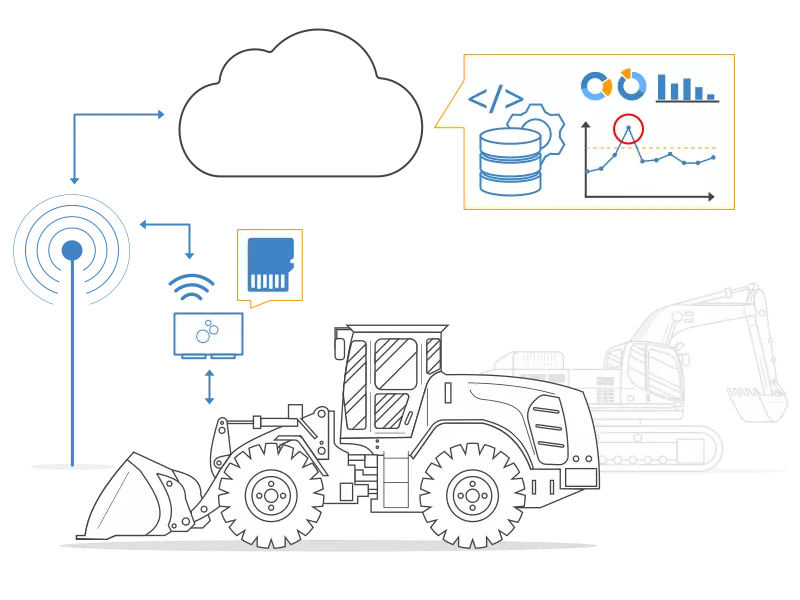
- Record data to SD card and upload automatically via 3G/4G worldwide.
- Use your own server (self-hosted or cloud-based)
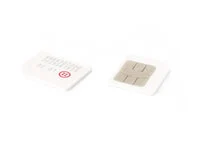
- Use your own SIM card (or90% Discounted Super SIM Card)
- Simply add your SIM card/server details to the configuration
- Set the file split size/period to control the upload frequency.
• 100% Security: HTTPS, certificate encryption, etc.
- Management via wireless updates (firmware and configuration)
- Zero cost. Zero locking. Interoperable. Open Source Tools
GPS and 3D IMU - enriching your data
CANedge1 is equipped with advanced GNSS/IMU functionality - ideal for automotive/marine use cases.
- Add more than 40 GNSS/IMU signals to your 2 x CAN/LIN data.
- Full GNSS support (GPS, Galileo, Beidou, GLONASS)
- Built-in gyroscope (roll, pitch, yaw) and accelerometer (X, Y, Z)
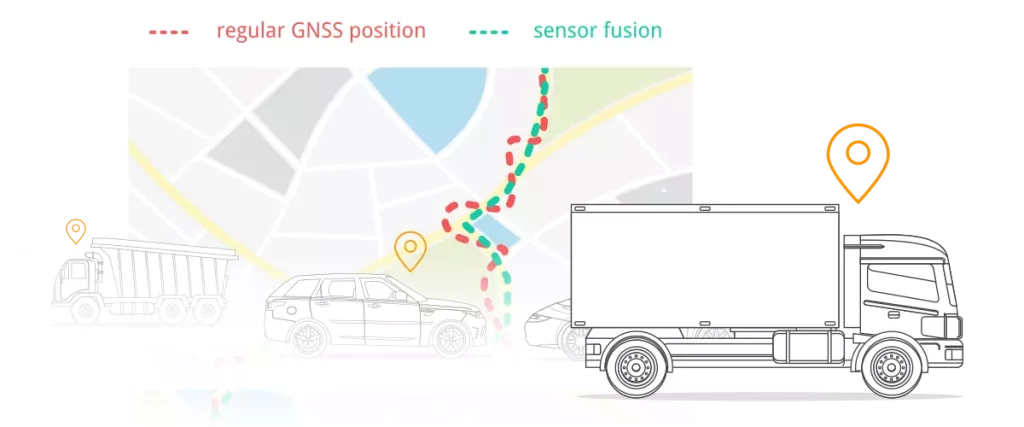
- High accuracy through sensor fusion - even in GNSS-opposed areas
- Signal coding is “internal” CAN frame (separate channel)
- Configurable message inclusion/frequency (up to 5 Hz)
- Includes DBC files that can be easily decoded into a human-readable form
- Optionally synchronize CANedge RTC with precise GNSS time
- Flexible deployment via external GNSS antennas
Open Source Software/API
CANedge3 uses open formats (MDF4 data, JSON settings, S3 server) - all software/APIs are 100% free and open source!
This software toolkit provides the following features:
• Editors: Easily modify device configuration (online/offline)
• Converter: Convert data to various formats (e.g. vector ASC, PEAK TRC, CSV, etc.)
• asammdf GUI: Supports DBC conversion, data mapping and export.
• Python API: Automated Data Processing and Systems Integration
• Dashboard: Data visualization through customized browser dashboards
Specification
| Basic Description | |
|---|---|
| functional | Standalone CAN bus data logger with SD card, 2xCAN/LIN channels, 3G/4G LTE and GNSS/IMU |
| Firmware | Supports free firmware updates to add features |
| configure | Configuration files based on the popular open source JSON schema concepts |
| Software | Free open source editor tool for easy device configuration (offline/online versions available). Free open source CANcloud remote information processing platform for managing devices and data through a browser. A variety of tools for installing your S3 server as a local drive for easy access. Free open source asammdf software and API for editing, DBC conversion and plotting MF4 data. Free Open Source MF4 Converter - Drag and drop journal files to convert to CSV, ASC, TRC and more. Free open source Python API - e.g. for automated data processing, reporting or integration. Free open source remote information processing dashboard for visualizing DBC decoded data in a browser. |
| surety | CE-RED, FCC, IC, RoHS (please refer to the document), RCM (Australia). Voltage transient (emission/resistance) test by TUV SUD, ISO 7637-2:2011 (see document). |
| Warranty Policy | 1 year warranty |
| support sth. | Free, fast, high-quality support |
| originate | Denmark |
| CAN bus | |
|---|---|
| channel | 2 CAN channels (including CAN FD support) |
| Standard | ISO 11898: compliant with CAN (up to 1 Mbit/s) and ISO and Bosch CAN FD (up to 5 Mbit/s payload rate) |
| agree | Recording of raw data from CAN-based protocols (J1939/FMS, CANopen, NMEA 2000, OBD2, CAN FD, UDS, etc.) |
| identifier | CAN specification 2.0A (11-bit ID) and 2.0B (29-bit ID) compliant |
| Bit Rate Auto Detection | Bit rate can be detected automatically or set manually. |
| retransmission | Configurable retransmission of lost arbitration or error-disturbed frames. |
| Transceiver Protection | ±16 kV HBM ESD, ±15 kV IEC ESD, ±70 V bus fault, short circuit. Common mode input voltage: ±30V. TXD Apparent Timeout (prevents network blocking in case of failure). |
| LIN Bus | |
|---|---|
| channel | 2 LIN channels |
| Publisher/Subscriber | Each LIN channel can be configured as a LIN subscriber/publisher to support LIN data transfer |
| Customized Length | Supports customized frame length |
| Standard | LIN 2.0 compliant up to 20 Kbit/s (classic and enhanced checksum formats supported) |
| Transceiver Protection | ±8 kV HBM ESD, ±1.5 kV CDM, ±58 V bus fault. TXD Apparent Timeout (prevents network blocking in case of failure). |
| Data Logging | |
|---|---|
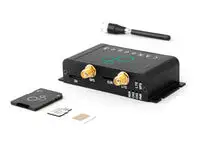
| SD card | Includes 8 GB of extractable Class 10 industrial micro SD (SDHC) (optional 32GB) - reads at 80 MB/s I |
| Parallel CAN/LIN | Simultaneous data recording for up to 2 CAN channels + 2 LIN channels |
| Real Time Clock | Yes - CAN frames are date and time stamped with 50 microsecond resolution (battery backed). The RTC can be set to match the local time zone (default: UTC). The RTC can be automatically synchronized via 3G/4G LTE or CAN messages (e.g., from internal GNSS time stamps). |
| Journal File Format | Record data in industry-standard binary MF4 (easy conversion to CSV, ASC, pandas, MATLAB, etc.) |
| Data Compression | Configurable embedded log file compression (size reduction of about 50-80%) |
| Mute Mode | Configurable Silent Mode: Restricted (Confirmation Only) or Monitor (Zero Transmission) |
| filters | 128/64 regular/expanded ID filters per channel (range, mask, accept, reject) |
| Preshrinking | Pre-scored CAN frames, e.g. recorded by time (every X milliseconds) or by data (e.g. if byte X or Y changes) |
| Send | List of CAN frames transferred per channel (single/regular) - e.g. for OBD2 requests |
| CAN error frame | Supports logging CAN error frames (bit fill, form, CRC, bit, acknowledge) |
| LIN Error Frame | Supports logging of LIN error frames (checksum, receive, synchronize, transmit) |
| Remote Frame (RTR) | Supports remote CAN frame (RTR) recording/transmission |
| Cyclic Record | Optional cyclic logging mode (the oldest log file will be deleted when the SD card is full) |
| Advanced Trigger | Control signals allow you to start/stop recording based on customized CAN ID and data thresholds |
| CAN heartbeat | Optionally transmits heartbeat CAN frames with device status, used storage space, and RTC time. |
| file splitting | Configurable log file split size (by size: 1-512 MB and/or by time period: 0-86400 seconds) |
| Power Safety | 100% Power safety data logging - no file corruption when disconnected |
| Unique Device ID | Each device has a globally unique ID, ensuring that log files are named uniquely |
| Data Encryption | Journal files can be encrypted at rest on the SD card for security/GDPR/CCPA (including integrity checking) |
| 3G/4G LTE | |
|---|---|
| SIM card slot | SIM card slot for external micro SIM card (medium) |
| SIM card | Use your own SIM card or activate the "Super SIM" included with your device (90% discount) Note: Verizon SIM cards are not supported |
| 3G/4G LTE Modules | Professional u-blox LARA-R6001D LTE Cat1 |
| Coverage | global |
| Frequency (band) | 4G LTE FDD bands: 1, 2, 3, 4, 5, 7, 8, 12, 13, 18, 19, 20, 26, 28 4G LTE TDD bands: 38, 39, 40, 41 3G bands: 1, 2, 5, 8 |
| Frequency (MHz) | 4G LTE FDD: 700, 800, 850, 900, 1700, 1800, 1900, 2100, 2600 4G LTE TDD: 1900, 2300, 2600 3G: 850, 900, 1900, 2100 |
| Certificates | CANedge3: PTCRB (antenna distance from the device >20 centimeters), AT&T |
| agree | HTTP/HTTPS: Stable and Secure Transmission - Ideal for Remote Information Processing of Big Data |
| Wireless (OTA) | Wireless configuration and firmware (COTA/FOTA). Configurable synchronization rate. Option to deactivate |
| irregular heartbeat | If enabled, CANedge3 periodically "checks in" by uploading a small device status file. |
| Data Upload Status | Option to disable/enable log file uploads (e.g. via wireless setup) |
| skyline | External (SMA). Expandable or replaceable via 2-in-1 antenna (3G/4G LTE + GNSS), etc. |
| S3 Server Interface | Upload data to your own cloud server (e.g. Amazon, Google, Azure) or self-hosted server (e.g. MinIO) |
| 3G/4G LTE Security | |
|---|---|
| HTTPS | Data and wireless updates can be sent over HTTPS (TLS 1.2) for secure transmission to the server |
| Certificate Encryption | S3 server credentials can be encrypted in the settings on the device's SD card. |
| Signature Firmware | Firmware updates are digitally signed to verify that they come from a trusted source. |
| User Policy | Fully customizable CANedge device and end-user access through S3 policies |
| GNSS and 3D IMU | |
|---|---|
| Module | Professional u-blox NEO-M9V sensor module (92 channels) with built-in gyroscope and accelerometer |
| Global Navigation Satellite System | Supports GPS (US), Galileo (Europe), BeiDou (China), GLONASS (Russia) combinations |
| Sensor Fusion (UDR) | Enhanced Positional Accuracy via Sensor Fusion (UDR) with GNSS and 3D IMU [Automotive Only] Up to 3 times more accurate than GNSS-only receivers Expanded and improved GNSS positioning in GNSS hostile areas (e.g. urban environments, tunnels, etc.) |
| Accuracy | Position: 2.0 m CEP (Circular Error Possible) Heading: 0.3 degrees |Pitch: 0.4 degrees |Roll: 0.6 degrees (68% at 30 m/s) Speed: 0.08m/s |
| sensitivity | Tracking/Navigation: 160 dBm | Cold Start: 148 dBm |
| Get | Cold start: approx. 30-120 seconds after equipment startup |
| Global Navigation Satellite System Antenna | GNSS-based data needs (not applicable to IMU) |
| Data parameters | CAN coding: GNSS/IMU data coded as "CAN messages" in CANedge log files (on separate channels) Configuration: GNSS/IMU messages can be filtered/prescaled to enable customized message inclusion and frequency; recorded only when valid (optional) Signal: A number of GNSS/IMU signals have been added to this module (see the documentation or DBC file for a complete list), including: - GNSS position: Latitude and longitude information [5 Hz] - GNSS time: based on precise GNSS epoch timestamps [5 Hz]. - GNSS status: Fixed type (NO/UDR/2D/3D/GNSS+UDR) and satellite count [5 Hz]. - GNSS speed: Travel speed in m/s and km/h [5 Hz]. - GNSS Altitude: Altitude in meters [5 Hz - Attitude/Direction: Roll, Pitch, Heading [Vehicle Only] [5 Hz] - GNSS odometer: Travel distance (after power-up) [5 Hz] - 3D IMU: Acceleration based on accelerometers (X, Y, Z) [5 Hz]. - Geofences: status of configured geofences [5 Hz] |
| Electricity | |
|---|---|
| Input Power | +7V to +32V DC via channel 1 DB9 (e.g. from vehicle/machine power supply) |
| Power Consumption | Very low (approx. 1 W during normal operation, 2.5 W during 3G/4G transmission) - No risk of battery drain |
| Protection | Reverse voltage protection for the CAN bus power supply. Protection from transient voltage events on the power line. |
| mechanical | |
|---|---|
| Casing and Weight | Compact Aluminum Housing: 75 x 47 x 20 mm (W x L x H without flange and antenna connector) 100 grams |
| skyline | 3G/4G LTE antenna and GPS antenna included |
| France | Flange with 4 x M3 screw holes (head diameter < 6 mm) - see also CANedge “Installation kit” |
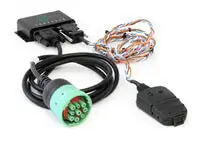
| Connectors | 2 standard D-sub 9 (DB9) connectors (optional OBD2/J1939/...) Adapter) |
| Pin assignment | For DB9 connector pinout, please refer to the product manual. |
| Configurable power outputs | Channel 2 can be configured to supply 5V to external modules such as CANmod sensors to CAN modules. |
| LED | Indicates recorder status via 6 external LEDs: Power, CH1, CH2, Memory, LTE, GNSS |
| Temperature | Operating temperature (parts): -25°C to +70°C |
| Protection Level | Defense Level 40 |
Frequently Asked Questions
In most settings, CANedge3 will upload data at a rate of approximately 4-7 MB/minute. For most use cases, this is more than sufficient to enable consistent offloading of SD cards.
For example, if you record 2 x CAN from a truck without any size optimization, you will typically generate about 1-3 MB/minute of data. In this case, you can easily offload the log file even if you haven't covered it for a while.
In addition, in more realistic scenarios, you will want to optimize log file sizes with filters, prescalers, compressors and triggers - see also ourguidebookThe optimization of the data is not a good idea. Enabling such optimizations usually results in logging data at speeds close to 0.01-0.05 MB/minute.
Therefore, the main situation where upload speed can be a bottleneck is if you deploy CANedge3 to “log everything” for long periods of time and the device is located outside of the cellular network's coverage area (e.g. on a ship or in a mine). Here you need to check the amount of data accumulated during the period outside the coverage area and the time spent by the device in the coverage area.
The CANedge is the second generation of the CLX000. we generally recommend using the CANedge for data logging use cases, and primarily recommend using the CLX000 if you need to transfer data via USB.
Key improvements of the CANedge over the CLX000 include:
mechanical
- SD can be retrieved:Captures SD and transfers data at 80 MB/s (vs. 0.5 MB/s for CLX000 via USB)
- Industrial SD: CANedge uses an industrial SD card to improve performance, life, temperature range, and more.
- Passage: 2 x CAN/LIN channels with parallel recording 2 x CAN + 2 x LIN
- Aluminum housing:The new housing is as compact as the CLX000, but more rugged and offers the ability to mount flanges.
- Power output:Powering external modules via a second port, such as theGPS to CAN或Temperature to CANModule
- Solid protection: CANedge with enhanced protection against voltage spikes, etc.
Log files and software/API
- MDF4 Journal Files:Popular binary MDF4 format - more compact than CSV, faster processing, supported by many CAN tools
- Configuration:Open SourceConfiguration EditorCan be used online/offline through your browser.
- JSON Schema:The profile is based on the standardizedJSON SchemaConcepts, supported by many open source tools
- Converter: Open source lightweight converter to convert MDF4 drag and drop/CLI to e.g. *.csv and *.asc
- asammdf GUI: Supports user-friendly MDF4 journal file editing, DBC conversion (including OBD2/J1939), graphic drawing, and more!
- Python API:Easy large-scale data processing and automatic creation of reports, databases, dashboards, etc.
- MATLAB:Log files integrate locally with MATLAB's Vehicle Network Toolbox
- Dashboard:Easily visualize your data in free customizable Grafana dashboards
Data Logging
- No damage: CANedge can record complete bus loads with zero message loss (CLX000 limited to approx. 800-1000 frames/sec)
- Compression:Optional compression reduces file size by up to 80% compared to the CLX000.
- Encryption:The optional encryption feature allows you to encrypt log files on the SD card for added security.
- Advanced Configuration:More advanced filters and transmission lists (e.g., up to 128 filters vs. 8 on the CLX000)
- Accuracy: 20x better RTC resolution (50 microseconds) - with advanced RTC synchronization options
- Startup time:Much faster start-up time than CLX000 (approx. 1 sec. vs. approx. 10 sec.)
- CAN FD: The CANedge supports CAN FD (Flexible Data Rate), making it future-proof.
- Trigger:Control when to start/stop recording/transmission based on customized CAN signal thresholds
- Error frame: CANedge supports CAN/LIN error frame recording.
- LIN slave/master: The CANedge can act as both a LIN slave and a LIN master (publisher).
GNSS/IMU + connection
- GNSS/IMU: CANedge support for optional built-in GNSS/IMU functionality
- WiFi: CANedge2 supports WiFi data transfer to your own cloud/self-rack servers (including OTA updates)
- 3G/4G LTE: CANedge3 supports 3G/4G LTE data transfer to your own cloud/self-rack servers (including OTA updates)
CANedge3 can split files every 10 - 86400 seconds or every 1 - 512 MB. When a new log file is created, it is automatically transferred to your server via 3G/4G LTE. As a result, you get a steady stream of incoming files - and by using AWS Lambda and our Python API, you can automatically process incoming data "near instantly".
We have many users deploying CANedge2/CANedge3 for near real-time uploads, see hereCase Study on Predictive Maintenance of AutomobilesThe data processing tools available to the user are not available to the user. However, in order to use it effectively, a slightly more advanced use of the available data processing tools is required.
However, for most intentions and purposes, we recommend using a medium/large log file size (e.g. 5-20 MB) to avoid an excessive number of log files in the server.
CANedge requires the use of specific industrial SD card models to ensure performance and power security. You can select either an 8 or 32 GB SD card as an option at checkout.
You should not use 3rd party SD cards as they may cause data corruption and other forms of non-functional behavior.
Yes, this version of CANedge includes the GNSS/IMU module. If you install a device with an external GNSS antenna, you can choose to synchronize the recording of GNSS/IMU data with 2 x CAN/LIN data.
GNSS/IMU messages are logged as if the data were broadcast over a CAN bus network recorded by CANedge. To separate it from the CAN/LIN channel, the data is stored in a log file under a separate "internal" pseudo-channel.
For a general introduction to CAN logging with CANedge, please refer to our45-minute webinar(Recap on CANedge1/CANedge2).
Below, we outline the basics of how to get started recording raw CAN data:
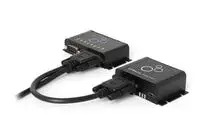
- Connect the CAN logger to the CAN bus (optionally with our adapter cable)
- The device boots up, detects the bit rate and starts recording the raw data to the SD card.
- Disconnect the device, extract the SD and insert it into the PC.
- In asammdf GUI/APIetc. to open the original log file for theDBC Decodingand visualization
Next, you canSetting up your own serverand configure CANedge3 to connect to it to automatically upload log files. After connecting the device, it will automatically upload the log files if there are log files on the SD card. After successful upload, the log file will be deleted from the SD card.
Note that you can use the SIM card supplied with your device - or insert your own SIM card.
In addition to the 3G/4G LTE features in CANedge3, theCANedge1Same as CANedge3 100%.
If you need to collect CAN data only rarely and the device is easily accessible physically, then CANedge1 is usually sufficient. However, if you need to collect data frequently and ideally remotely, then the CANedge3 quickly pays for itself. In particular, if you need to collect data across fleets or machines, CANedge3 is more practical and cost-effective.
CANedge3 has the added advantage that you can fully automate data collection and data processing workflows. For example, you can set up automatedPython APIScripts to modify data, perform DBC decoding, such as setting up theRemote Information Processing DashboardThe CANedge3 is also easier to manage in the field. CANedge3 is also easier to manage in the field, as you canCANcloud Remote Information Processing PlatformMonitor status and perform operations such as wireless configuration and firmware updates.
For use cases where a WiFi network is available, we recommend CANedge2. If you need to upload data via 4G LTE (cellular), we recommend CANedge3.
CANedge is designed to provide "professional specification" CAN/LIN recorders in the market.Optimal value/cost ratio.
In particular, it is distinguished from similar devices by the following factors:
- Professional specifications: CANedge offers specifications equivalent to the best available recorders
- Compact: CANedge Smaller than similar devices 50-80%
- Low cost: CANedge costs 50-80% less than similar devices
- Easy to use:Device is ready to use without configuration
- FOSS:All software/API tools are 100% free and open source.
- Interoperable:Open standards and tools can be integrated into any system - no lock-in
- Free support:We offer free first-class technical support
But don't take our word for it - take a look at our 50+ products from Volkswagen, Siemens, Bosch, Cummins and more!Case Study.
In addition to the above features, CANedge3 can automatically upload log files to your own server via 3G/4G LTE:
- SD + 3G/4G LTE:Automatically uploads data via 3G/4G LTE - and buffers data to SD when out of signal coverage
- Your server: By uploading data to theyourCloud/self-contained server, retains 100% ownership and control of data.
- Security: CANedge3 ImplementationEnd-to-End Enterprise Security
Lastly, built-in GNSS/IMUThe inclusion of the device reinforces the versatility of the device.
These factors make the device an excellent choice for automotive/industrial OEM engineers.
Honghong will provide you with any support you need!
Our professional Honghong team will be the first to respond and provide you with the best service to solve all your problems.