preamble
Cold chain movement through cold chain monitoring keeps the world moving and proves that products are safe to consume. We have come to rely on this form of modern technology to supply all perishable goods - not just those that sustain us - but those that make our lives better. So if there's one area where accuracy is key, cold chain monitoring is it.

1. Cold Chain Compliance GDP Transportation
Good Distribution Practice (GDP) is a benchmark and compliance requirement for the pharmaceutical industry, including manufacturers and their subcontractors. Good cold chain monitoring is a reliable way to ensure compliance. In order to be compliant, compliance and integrity must be maintained from the moment a product leaves the manufacturer, throughout the supply chain to the end customer. Therefore, regular audits are more of a necessity than a hassle.
Achieving cold chain compliance in transportation requires three key aspects: equipment, services and transportation conditions. For equipment used to protect and maintain temperature control, it must be GDP-compliant. This includes insulated packaging, refrigerated cabinets and cold rooms, as well as any equipment used prior to transportation, shipping or arrival.
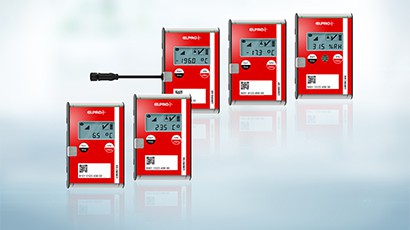
A data logger is one such device, and the GxP-compliant and calibrated LIBERO G is a good example. This real-time temperature data logger and position tracker is FDA 21 CFR Part 11 compliant with ISO 17025 calibrated sensors. Again, the operations team must be GxP qualified. Staff should be trained in the management of temperature-sensitive products, and the equipment they use should be specifically designed for temperature control.
Finally, transportation conditions affect compliance, so each shipment should undergo a well-prepared route analysis. Seasonal variations are possible, and the best way to prevent mismanagement is to conduct trial shipments.

2. Calibration certificate for GDP-compliant cold chain data loggers
What are the benefits of using GDP-compliant data loggers? When it comes to ISO 17025 certification, it is widely regarded as a must for laboratories and research centers that perform testing and calibration of products. Because of this specialCalibration CertificatesNot only does it demonstrate compliance with technical and regulatory requirements, it is also a way for laboratories to claim technical expertise and competence. In addition, obtaining accreditation from the International Organization for Standardization, a respected regulatory body, is a means of demonstrating that results are accurate, comply with industry standards and protocols, and are unlikely to be challenged in court, in the business environment, or by customers.

3. Real-time monitoring of transportation: avoiding damages.
Manufacturing and storing temperature-sensitive goods for optimal quality is a challenge, but transporting them across borders adds even more complexity. Not only are they susceptible to damage at the slightest impact, but these goods can actually fail due to changes in temperature and humidity levels.
This is where real-time cold chain monitoring comes in. Traditional GPS or GSM (2G/3G/4G) real-time measurement devices are connected to the container, read 24/7 and shared in real time.
The lightness of the latest technology ELPRO LIBERO G SeriesIt uses 4G LTE mobile networks and new NB-IoT technology and provides valuable data that can be securely shared over LPWAN (aka “mobile internet of things”) networks. This technology changes the game by providing unrestricted, low-power access for mobile and fixed applications with deep penetration in buildings.

4. Cold Chain Automation Control System
Manual operations in cold chain monitoring present a variety of challenges to forward-thinking companies. However, automated control systems are virtually free of the risks of human error, product and equipment damage, and high labor turnover.
Instead of adjusting data to please supervisors, ignoring deviations to complete shifts on time, or missing variances altogether, the automated control system will provide accurate, objective, and precise readings.
Automated control is a way to prevent contamination and deterioration, reduce waste, and save energy, time and other resources. It also extends shelf life, ensures reliable customer protection and minimizes insurance costs.
utilization LIBERO G SeriesData logger products have the added benefit of being able to select the best equipment for a particular shipment. Whether you intend to use it once, many times or continuously, LIBERO loggers are versatile and can be used in a variety of applications.
There is also a version that is best suited for storage and monitoring.LIBERO GE The product is ideal for ultra-low temperatures during frozen and dry ice shipments.

5. Cold Chain Management with the Right Dashboard
Once you have acquired the ideal recording device, you need to consider using the dashboard for analysis. Is it user-friendly, intuitive, and does it provide easy access at your fingertips? Because a poorly designed dashboard can ruin the whole experience of real-time cold chain monitoring.
What users should look for in a data logging software package is: a package. For example.LIBERO Gx is an out-of-the-box solution. Simply turn it on, check the progress of your shipment on your smartphone via the ELPRO website, and be notified instantly when something goes wrong.
However, if someone favors the idea of GxP compatibility, security, and real-time monitoring of not only shipments, but also equipment and rooms, then the ELPRO Cloud software is a good case in point. It is suitable for use with LIBERO Gx devices together with the ECOLOG PRO series. Together with this professional-grade software, these devices give you access to real-time logs, alerts, stability budgets, API integrations, and your own SaaS archives.
LIBERO Cloud is the perfect solution for unlimited, flexible and unrestricted access to customizable databases. Compatible with LIBERO Gx, Cx and ITS models, it has all the features of ELPRO Cloud but with some irresistible extras:
- End-to-end monitoring with full control over how data is displayed.
- Multiple workflows for seamless transitions between data points.
- Automatic evaluation for 24/7 assurance and reliability.
6. Record the temperature offset and set the stability budget.
The stabilization estimate is an important aspect of cold chain monitoring. It is the result of temperature study data and stability test results. It determines how long a product can deviate from its labeled storage conditions. From manufacturing, packaging and transportation, to the customer using it, the exposure of the product is a time journey that needs to be accurately documented and temperature excursions must be taken into account every step of the way.
Rather than manually adding any reported deviations for each branch of the supply chain or assigning unused stability budgets for future branches, ELPRO prefers a “push” residual stability budget (RSB) approach to cold chain management. Being able to record these short trips saves users the hassle of discarding perfect products, reduces logistics and packaging costs, optimizes inventory, reduces waste and unnecessary paperwork, and ultimately benefits the customer.
With such a stable budget, users can be certain that the product is safe and that cold chain management duties are performed with the highest level of transparency and without cutting corners.
ELPRO's revolutionary software suite and its line of high-precision LIBERO data loggers make it easy for customers to develop and track stable budgets. With ELPRO, customers have a complete view of their operations. With the rise of LPWAN technology, this increased visibility into the inner workings of your business provides a competitive advantage that will gradually propel you to a higher position in the industry.
Recommended Products