
The Aristotle University of Thessaloniki, the largest university in Greece, is located in the north of the country, near the Sea of Love. A team of student researchers (Aristurtle) is advancing the development of autonomous car racing in the Balkans.
Electricity and autonomous driving are the future of automobiles
Since 2015, Aristotle has been building electric vehicles and participating in theFormula Student(FSE) competition. Teams to dive into unmanned driving in 2019automobile(DV), modified their electric cars and participated in a student DV contest.
Later in the same year, the most prestigiousFormula SAE (Formula Association of Automotive Engineers)* German Student Formula(FSG) announced that by 2022, all teams will compete in a single class consisting only of vehicles with electric powertrain and self-driving capabilities.
In 2021, the team represented the University in a number of international FS competitions at theBusiness Plan Showcase Event(for the third consecutive year)Austrian Student Formula(FSA) and passed all the technical checks with flying colors. They also drove their team's fifth car and their first unmanned car in theFormula Student East competition.
Kvaser's Role in Aristurtle's Driverless Car
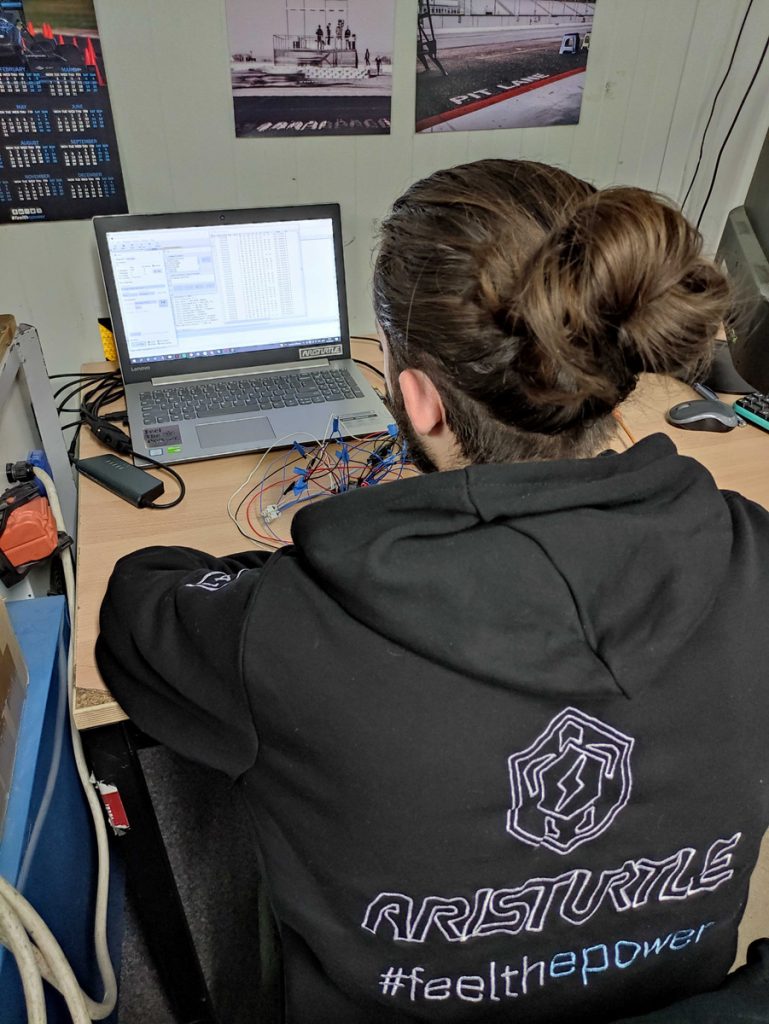
Aristurtle's team for the 2021-2022 racing season consists of 30 ambitious members with more experience and a strong desire to innovate than ever before. Their sixth car will be very different from their previous models; they will design and build a new type of electric vehicle with integrated autonomous systems that will be able to compete in both DV and non-DV races.
The team's most challenging goal for the future is the integration of autonomous systems. The goal is to maintain the performance of their previous car and make immediate changes to drive it to faster lap times, while designing the detachable and lightweight components necessary to make the vehicle unmanned.
CAN is the main communication protocol in Aristurtle's latest vehicles.Kvaser Mini PCI Express 2xHS v2 The CAN interface is used to communicate between the Autonomous Processing Unit (APU) and the vehicle's wider network of microcontrollers and sensors, allowing steering, braking and immediate sending and receiving of throttle commands.
Aristurtle has something to say.
“The Kvaser Mini PCI Express 2xHS v2 plays a critical role in the development of our driverless cars. The component serves as a bridge between the computer, the Autonomous Processing Unit (APU) and the rest of the vehicle, and our“Robot Operating System”(ROS) has all the algorithms running here.”
There is another reason to choose Kvaser:
“The main reason we chose Kvaser products is that they are well supported and have excellent profiles. These characteristics are very important when choosing a partner; it's vital that your peers can give you a sense of confidence when you think you've reached a dead end.”
What Kvaser products do they use?


The Kvaser Mini PCI Express 2xHS v2, a small (30 x 51mm) but advanced real-time CAN interface, adds two high-speed CAN or CAN FD lanes to any standard computer with mini PCI Express capability.
PC communication is carried out over the PCI Express system bus, enabling extremely low latency and 1 µs time stamping accuracy.

Kvaser USBcan Light 4xHS, a compact, reliable and cost-effective way to connect four high-speed CAN buses to a PC or mobile computer.
This USB to 4-channel CAN interface comes standard with current isolation, a standard USB connector on one end and four high-speed CAN channels in a 26-pin HD D-SUB CAN connector on the other. The included HD26-4xDS9 splitter can be used to connect four independent 9-pin DSUB connectors.
↓ Contact us for more product information ↓