Network Failure Causing Out-of-Control Traffic? See how IEEE 802.1 Qci solutions in TSN networks can win the day!
In today's rapidly evolving field of intelligent communications, time-sensitive networking (TSN) has become a key technology to ensure high reliability and low latency in network communications.IEEE 802.1 Qci, a key component of TSN, provides a powerful mechanism to manage network traffic.This article will discuss the basic concepts of the IEEE 802.1 Qci protocol and how it works, as well as the Qci solution provided by Honghong. In this article, we will discuss the basic concepts of the IEEE 802.1 Qci protocol, how it works, and the Qci solutions provided by Macronix to help you understand how to improve the stability and efficiency of your network through precise traffic control.
I. Technical Introduction
Time Sensitive Networking (TSN) defines a critical high availability protocol through the IEEE 802.1 Qci standard. The main purpose of this protocol is to prevent unconfigured or faulty devices from sending unnecessary traffic that could interfere with other classes in the network.Qci utilizes multiple fields in the Ethernet frame, such as MAC address and VLAN ID, to identify and differentiate between different data flows.。
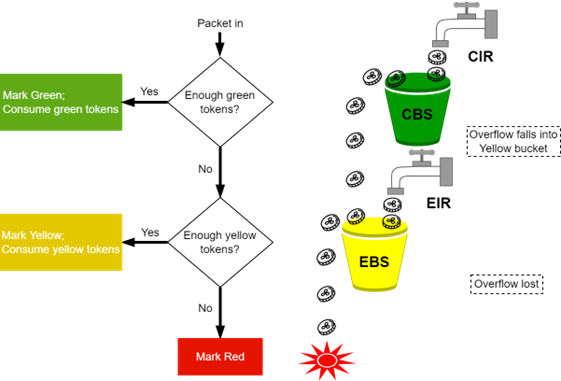
Figure 1 CBSEBS Token Bucket Flow Control Mechanism
Once the data flows are accurately identified, rules can be set for each flow independently, including:
- Set the maximum packet size allowed for each stream.
- Specify maximum bandwidth usage per stream
- Controlling the transmission of data packets, including allowing or prohibiting the transmission of specific data flows
Bandwidth limitation in Qci uses a credit and scepter bucket mechanismThis mechanism ensures effective control of bandwidth utilization for each data process.
II. Principle of operation
PSFP (Per-Stream Filtering and Policing) prevents traffic flooding and malicious node attacks by filtering and policing the data flow.The PSFP contains three levels/functions:
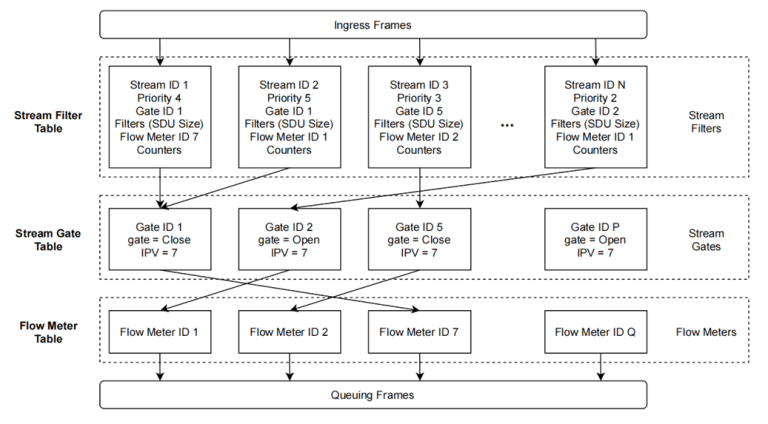
Figure 2 TSN Ingress Frame Flow Diagram
- Identifying and filtering data processes through filters: Different filters are selected based on Stream ID and Priority, which is identified by a feature in 802.1CB.
- Stream gate controls the amount of data flow: Assigns an internal priority value IPV to the frame passing through the gate to determine the traffic class.
- Monitor the flow of data into the Meter: Set the upper limit of the flow rate and discard the data when it is exceeded.
Honghong Qci Solution
By implementing the IEEE 802.1Qci standard, Macronix TSN switches provide a set of per-flow filtering and monitoring features to ensure that the scheduling traffic is not affected by configuration errors or equipment failures that may occur at the network infrastructure entry points.。
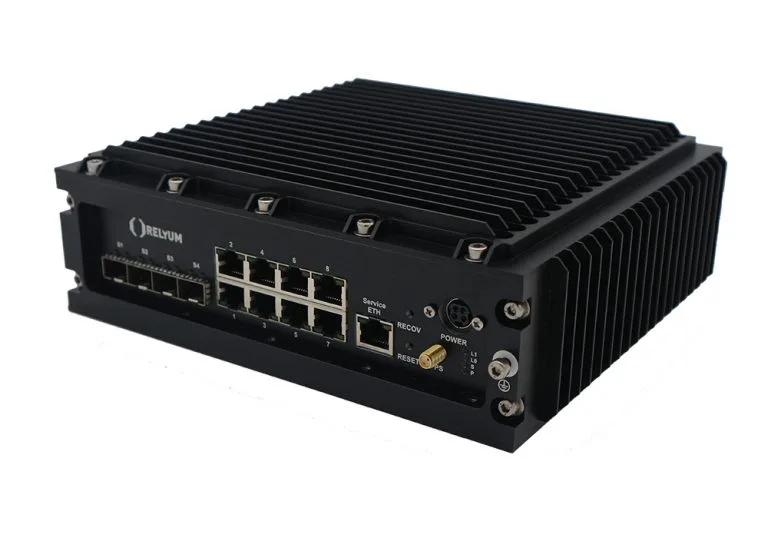
Figure 3 Relyum Network Equipment
The following are the key police actions of Macronix Qci solutions:
- Frame length monitoring: Allows you to set the filter standard based on the maximum frame length.
- Monitoring of unconfigured data processes: Performs policing or re-marking to lower priority for data flows that use the same traffic class but are not configured.
- Door-based monitoring: Allows frames to be received only when the flowgate is open.
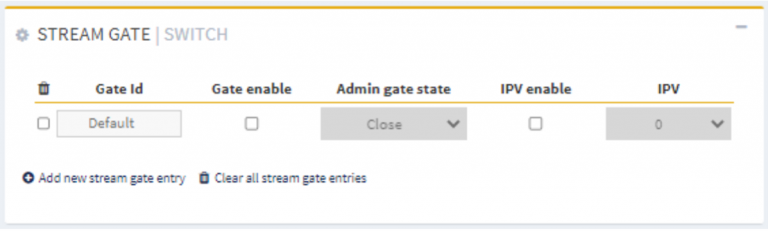
Figure 4 Stream Gate Traffic Management Interface
PSFP and flow meter management
Flow Meter records flow information for each data process to support monitoring and optimizing flow operations.。

Figure 6 Flow Meter Setup Interface
Extended flow chart (accessed via CLI):
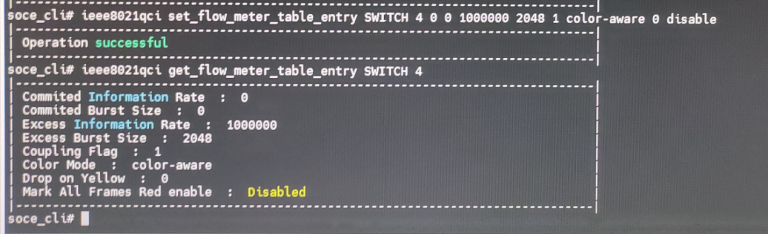
Figure 7 Flow Meter CLI Setup Operation
PSFP statistics record filtering and supervisory operations, providing network performance monitoring and optimization data.。

Figure 8 PSFP Statistics Data Interface
Conclusion: Future Applications of TSN and Qci
The IEEE 802.1 Qci protocol is becoming more and more widely used in industrial networks, especially with the further development of industrial automation.Qci Solution Qci solution provided by Macronix effectively improves the stability and efficiency of the network through per-stream filtering and monitoring.Prevent network problems caused by misconfiguration or device failureThe Qci standard is a key component in the design of industrial networks. As time-sensitive networking (TSN) technology becomes more prevalent, understanding and applying the Qci standard will be key to industrial network design.Ensure efficient and stable operation of future network environments。