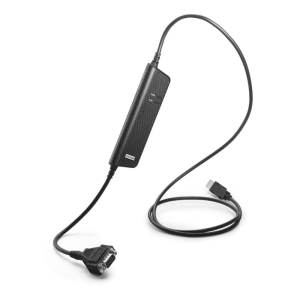
The steering wheel module of a certain model adopts the LIN bus communication type, which contains physical keys and key backlight function, and sends and receives key signals through the main node for judgment. For the key backlight function module, by sending LIN signals for lighting and detection work; for the physical key, through the detection of its key signal, the test of key action.
Products
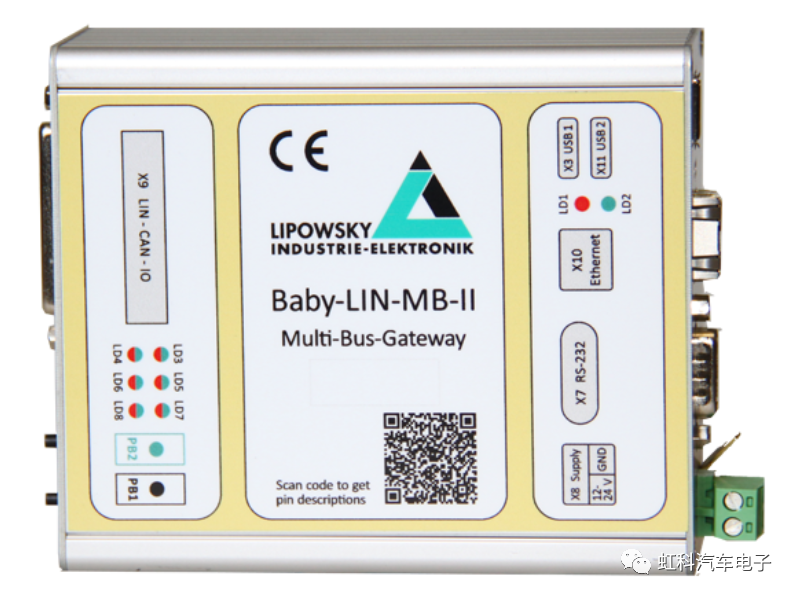
Item No.:BabyLin-MB-II
BabyLin-MB-II is an RS-232/Ethernet to LIN/CAN bus gateway module, which can control CAN and LIN bus node ECUs through RS232 and Ethernet; Baby-Lin-MB-II module has two expandable slots, which fully realize the modular design concept of the device, and the later expansion of these MIFs allows the device to meet more and more expansion needs (e.g. expanding to 6 LIN bus interfaces). The Baby-Lin-MB-II module is equipped with two expandable slots, fully realizing the modular design concept of the device.
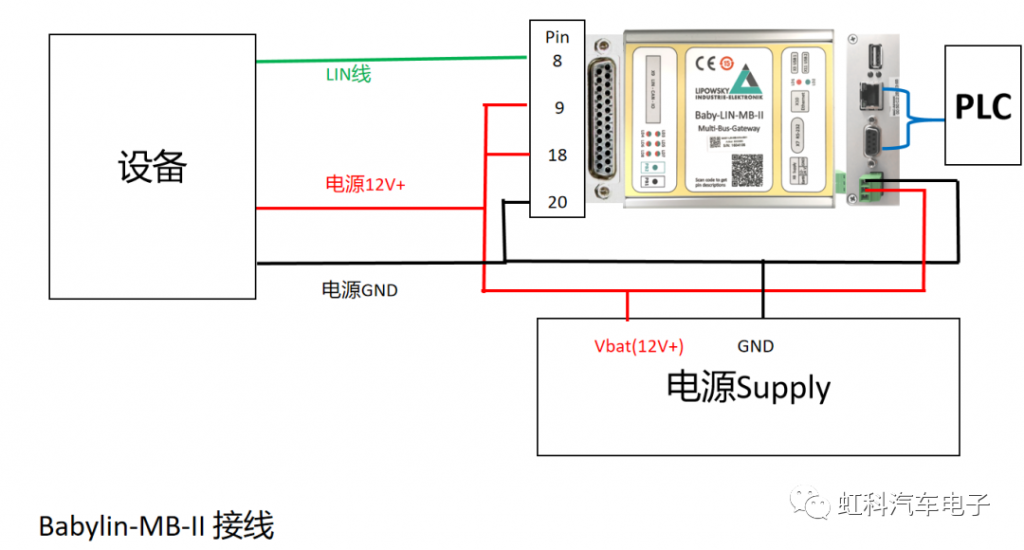
- Hardware equipment corresponds to the connection diagram for equipment connection, the specific line connection as shown in the figure below
- Configure the SDF file in SessionConf according to the communication matrix or LDF file of the device to be tested.
- First, the device key backlight is lit, according to the configuration file, turn on the key backlight
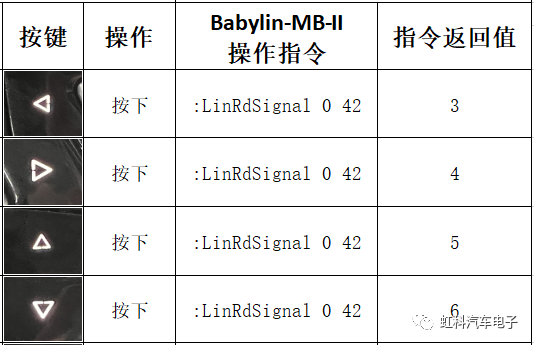
- Then the detection status of the physical keys is assigned, using the BabyLin-MB-II device with SessionConf to create analog signals of 8-bit length, i.e., up to 256 signal outputs, and each physical key in the steering wheel is outputted against a combination of virtual signals, and the operation status of each key is detected according to the signal output.
- After saving the configured SDF file and re-flashing it into the BabyLin-MB-II, you can perform keystroke detection on the host computer software through the corresponding operation commands.
Hardware connection sketch
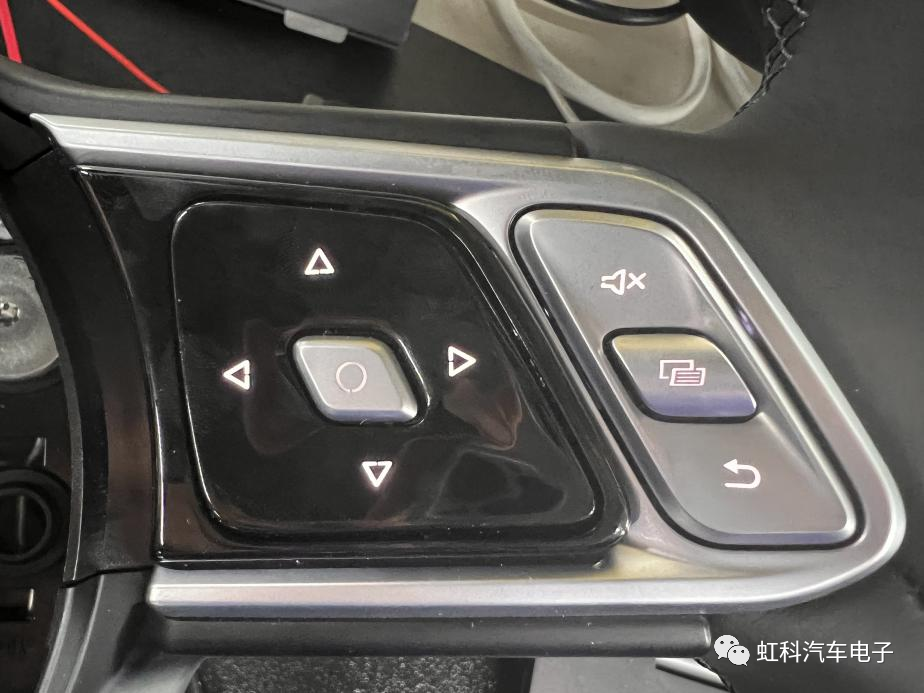
Steering wheel buttons with backlighting measurement
Correspondence between the status of steering wheel buttons and BabyLin-MB-II operation commands (part).
- After the BabyLin is powered on, the host computer sends ASCII string commands to realize the backlight of each physical button to light up successfully.
- To operate each key of the steering wheel, you can detect the key status by its corresponding signal condition, and you can send operation commands through the host computer software to detect the key according to the return value.